
Photo ©Mbangue Nkomba
Speaker: Yves-Patrick Mbangue Nkomba (University of Yaoundé II, FSJP, Cameroon)
Date: 04/17/2026
12.30-13.30 (Brussels Time)
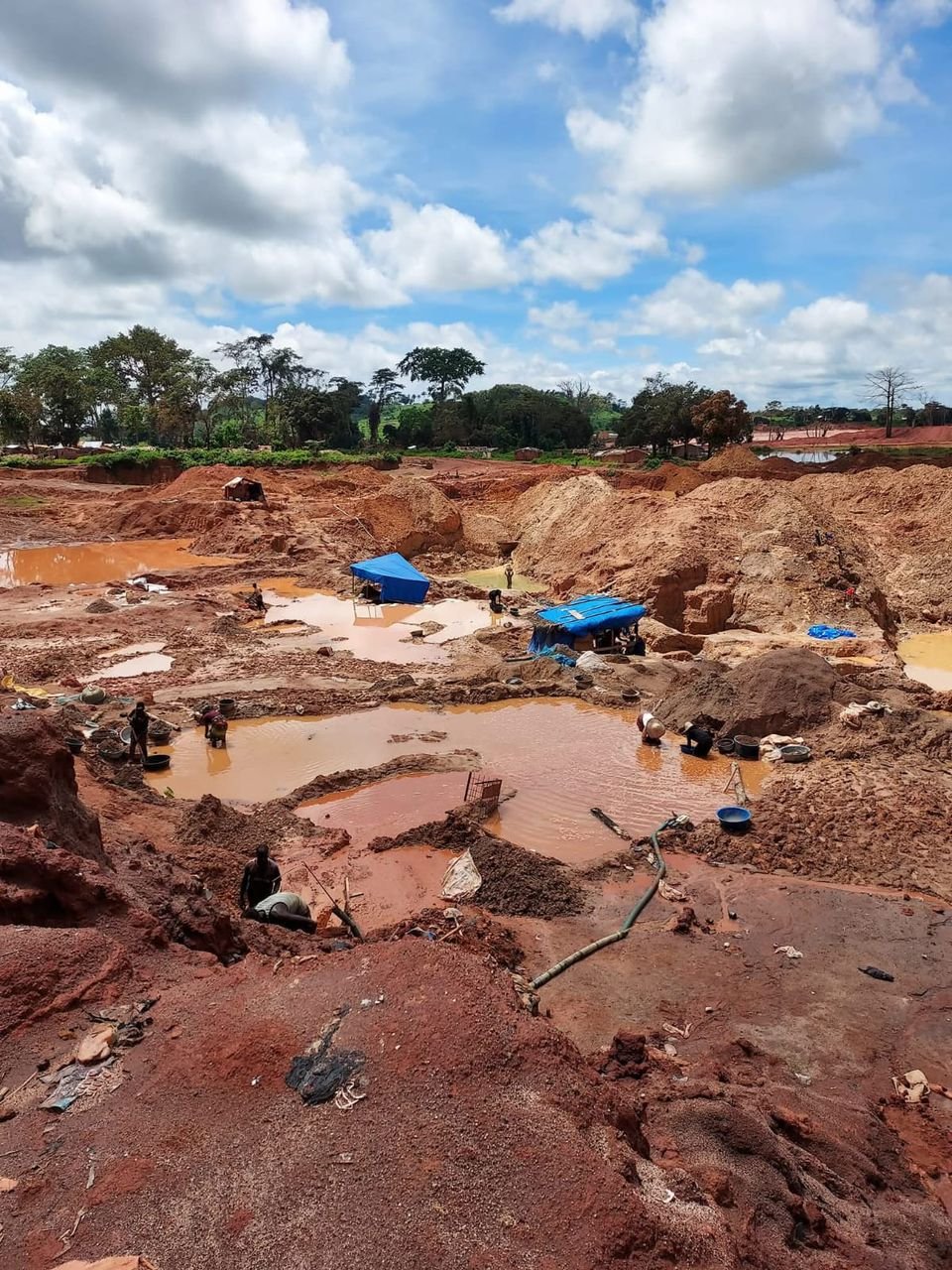
This reflection analyzes mobilizations against extractivism in Cameroon through the notion of an institutionalized repertoire of collective action. The latter is understood as a set of protest and advocacy practices that are framed and compatible with the constraints of the regime. Based on research conducted in the forestry and mining sectors, it shows that civil society organizations develop forms of action situated between contestation and cooperation with the State. These mobilizations rely on a dual perspective of extraversion, linked to the transfer of international activist knowledge, and introversion, corresponding to their adaptation to local neo-patrimonial logics. The article highlights two main modes of action: awareness-raising and denunciation, notably based on the production of data and the use of institutionalized tools. It concludes that these mobilizations take place within negotiated spaces of political tolerance, thus renewing the analysis of forms of engagement in the African context.
The speaker:
Yves Patrick Mbangue Nkomba is a political scientist and Senior Lecturer at the University of Yaoundé II (Cameroon), where he teaches political science and conducts research at the intersection of public policy analysis, political sociology, and international relations. Holding a PhD in political science focused on oil governance in Cameroon, his work more broadly examines contemporary transformations of the State in Africa, particularly through the instruments of public action, extractive dynamics, security issues, and technopolitical reconfigurations.
His recent research notably explores the institutionalization of mobilizations in African contexts, extractive and environmental policies, as well as the relationships between technology, power, and governance. He has published in several African and international journals on issues of extractive governance, security, climate policies, and democratic transformations, and regularly participates in international scientific conferences, contributing to the structuring of a critical research field on public action in Africa. His current work analyzes political reconfigurations through everyday state practices and social mobilizations, with particular attention to hybrid forms of collective action resulting from the complex nature of African systems in constrained contexts.
Meeting ID : 867 4760 9174
Passcode : 353834