
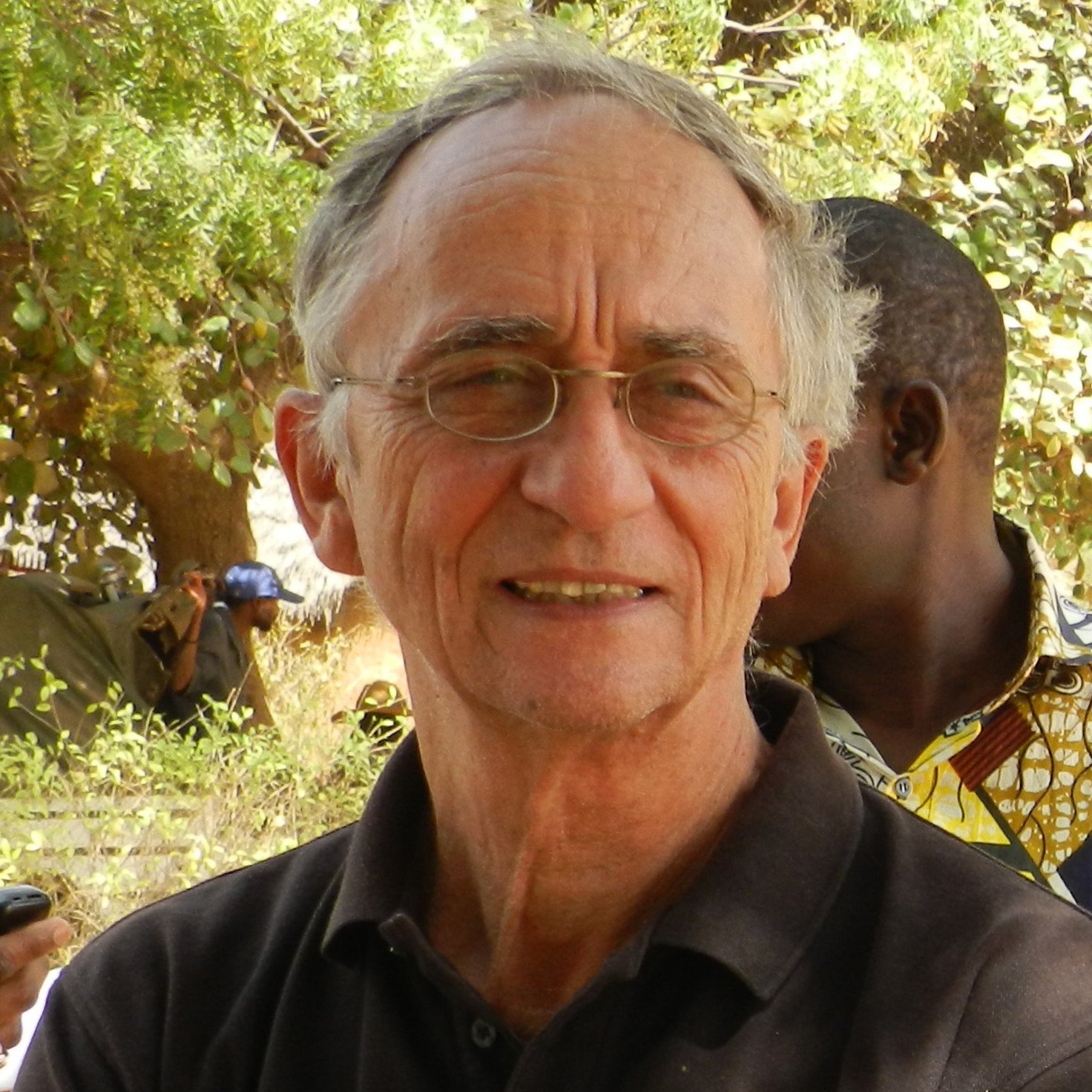
Speaker : Jean-Pierre OLIVIER de SARDAN (LASDEL)
Date: 20 November 2026
12:30–14:00 (Brussels time)
It is, of course, undeniable that the European colonisation of Africa involved massacres and was followed by regimes of plunder and apartheid. Equally undeniable is the fact that, after independence, France pursued neo-colonial policies, proclaimed itself the gendarme of Africa, and distinguished itself through the arrogance and paternalism of its leaders. Building on this widely acknowledged historical reality, decolonial studies have developed a highly ideological narrative according to which nothing has changed since colonial times. Coloniality is supposedly still pervasive throughout the world, rooted in eighteenth-century Eurocentrism (the Enlightenment), which is said to remain the epistemological foundation of Western knowledge in general and of the social sciences in particular. Most African regimes are supposedly still puppets controlled by yesterday's masters. This amounts to denying the profound transformations that have taken place in the social sciences over the course of the twentieth century. It also means denying the agency of African peoples and elites, and their capacity to act (for better or worse): democracy and decentralisation were not imposed by the West (even if the latter played a role), but are primarily the product of internal dynamics (student uprisings, national conferences, Tuareg rebellions, national and local political strategies, etc.). The contemporary history of Africa is complex, contradictory and shaped by multiple factors; it cannot be reduced to Western conspiracies. Finally, within the dichotomous narrative of decolonial studies, African universities are portrayed as serving coloniality and Western dominance and are expected to break radically with their supposedly pseudo-universalist scientific approach in favour of pre-colonial values and knowledge. This overlooks the importance of African social sciences today. Despite the economic, political and institutional constraints they face, these disciplines, through their understanding not only of the past but also of African modernities, make it possible to move towards a genuine scientific universalism.
Jean-Pierre OLIVIER de SARDAN is a French-Nigerien anthropologist and researcher at LASDEL in Niamey (Laboratory for Studies and Research on Social Dynamics and Local Development,(http://www.lasdel.net), which he co-founded. He was APAD's first president. He is also Emeritus Research Director at the French National Centre for Scientific Research (CNRS) and Director of Studies at the School for Advanced Studies in the Social Sciences (EHESS, France).
His extensive publications on Africa address, among other topics, pre-colonial and colonial history in western Niger as viewed by local populations, nineteenth-century slavery and its lasting consequences, the anthropology of health, the anthropology of development, and decentralisation. "La revanche des contextes. Des mésaventures de l’ingénierie sociale, en Afrique et au-delà", Karthala, 2021, provides an overview of thirty years of research on public policies, the development industry and public services in West Africa. He has also published a major reference work on the methodology and epistemology of qualitative social sciences: "La rigueur du qualitatif. Les contraintes empiriques de l’interprétation socio-anthropologique" (*Academia-Bruylant, 2008*). His two recent articles published in "L’Homme" on colonial studies, are part of an ongoing research project on ideologies in the social sciences.
He explains the reasons behind this critical yet measured examination of decolonial studies as follows:
“On the one hand, because a significant part of my personal journey has been devoted to the struggle against colonialism, neo-colonialism and their enduring legacies, and because I find it deeply regrettable that this issue is now, in a way, being appropriated by decolonial studies and placed within an essentially ideological framework that disregards numerous historical realities. On the other hand, because I have noticed, in numerous discussions on these topics, that various colleagues, and even more so doctoral students, had only a vague understanding of what was at stake, or confused opposition to colonialism with decolonial studies. I felt that some clarification was needed. And finally, because I am currently completing a study on the cognitive blind spots of ideologies. In this field, it is easy to criticise ideologies to which we are fundamentally opposed, while forgetting to scrutinise our own, or those that are relatively or seemingly close to us.”
To participate
https://us06web.zoom.us/j/86747609174?pwd=DOZPDzk69rqFwama9Wv0Lz3kZlvDI0.1
Meeting ID : 867 4760 9174
Passcode : 353834
Organising team : E. Eyebiyi (LASDEL & NMBU), S. Lahat Ndiaye (UMR SENS-IRD & LASAP UCAD), A. Dragani (LAP, CNRS-EHESS), M. Benidir (INAU, Rabat).